
Have you ever wondered how plants survive in harsh conditions—scorching sun, insect attacks, pollution and drought—all without running away or calling for help? The secret lies in their chemistry. Plants have evolved to produce a powerful arsenal of natural compounds that protect them from environmental stress. Among the most remarkable of these are polyphenols—a diverse group of phytochemicals that not only help plants survive but also offer impressive health benefits to us when we consume them.
What Are Polyphenols?
Polyphenols are a large family of naturally occurring compounds found in fruits, vegetables, tea, coffee, wine, herbs, spices and even dark chocolate. Scientists have identified more than 8,000 different types, grouped into categories like flavonoids (e.g., quercetin, anthocyanins), phenolic acids (e.g., ellagic acid), stilbenes (e.g., resveratrol) and lignans (found in seeds and whole grains).
But polyphenols weren’t made with humans in mind. They’re actually part of the plant’s survival toolkit.
How Plants Use Polyphenols to Survive Stress
Plants can’t run away, so they produce chemical defenses instead. Plants under different kinds of stress, send signals down to their root system to stimulate the secretion of sugar-like molecules from their roots (rhizome) which attracts certain microbes living in the soil. These microbes stimulate the plant to produce polyphenols which are transported up into the leaves and fruits of the plant. By this mechanism, polyphenols help plants:
- Neutralize harmful oxidative molecules produced by sunlight or pollution
- Deter predators and pathogens like fungi, bacteria & insects
- Strengthen cell walls to resist injury and water loss
- Filter ultraviolet radiation
- Signal other defense responses during times of injury or infection
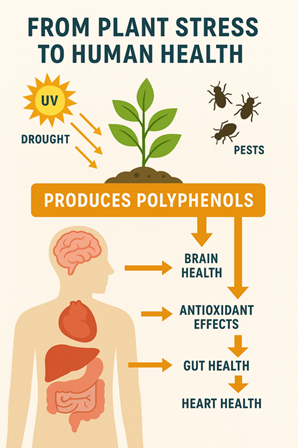 Think of polyphenols as both bodyguards and internal repair agents for plants under pressure. When a plant is stressed—say, by drought or UV exposure—it ramps up polyphenol production. In essence, stressed plants become more chemically “resilient.”
Interestingly, these stress-induced compounds are also what give many fruits and vegetables their rich colors and bold flavors—like the deep purple of blueberries or the sharp bitterness of dark greens.
How Polyphenols Benefit Humans
When we eat polyphenol-rich foods, we borrow these plant defense molecules to help protect our own cells from stress. Unlike vitamins and minerals, polyphenols aren’t “essential” nutrients—but mounting evidence shows they play a powerful role in promoting long-term health.
Here’s how they work in the body:
1. Gut Microbiome Modulation
Only a very small proportion of most polyphenols are absorbed in the proximal small intestine. Instead, they travel down to the colon, the vast microbial ecosystem where gut microbes break them down into bioactive metabolites.
These breakdown products—like urolithins from ellagic acid or phenyl-γ-valerolactones from flavanols—can then be absorbed into the bloodstream and influence everything from metabolism to heart and brain health.
Even more exciting, polyphenols feed beneficial gut bacteria (like Akkermansia muciniphila and Bifidobacterium) and inhibit harmful ones, acting as prebiotic-like compounds. In this way, polyphenols shape the microbiome toward a healthier profile, reinforcing the integrity of the brain-gut microbiome system.
2. Antioxidant Effects (But More Than Just That)
In cell cultures, or isolated tissues, polyphenols can scavenge free radicals, unstable molecules that damage DNA, proteins and cell membranes—a process linked to aging, cancer and chronic diseases. However, when consumed by humans, the antioxidant effect is minimal, as the large polyphenol molecules cannot be absorbed intact by our small intestine. But their real magic lies in something more complex: they activate our body’s own antioxidant defense system.
A key pathway here is the so-called Nrf2 pathway—a genetic switch that turns on protective enzymes like glutathione peroxidase and superoxide dismutase, the two most important antioxidants our body produces. Think of polyphenols as nudging our cells to become more resilient over time, kind of like a biological workout.
3. Anti-Inflammatory Signaling
Chronic, low-grade inflammation is now considered a root cause of many chronic conditions, including heart disease, diabetes and neurodegenerative diseases like Alzheimer’s.
Polyphenols can downregulate inflammatory messengers such as NF-kB and TNF-α, helping to cool systemic inflammation. They don’t block inflammation like NSAIDs, but instead help regulate it in a balanced way.
4. Brain Health and Cognitive Function
Certain polyphenols cross the blood-brain barrier, meaning they can directly influence brain cells. Studies suggest polyphenols stimulate nitric oxide production and improve microcirculation in the brain (flow in the smallest blood vessels, reduce neuroinflammation and protect against neurodegeneration.
For example:
- Resveratrol (from grapes/red wine) improves hippocampal function.
- Anthocyanins (from dark colored berries) are linked to improved learning and memory.
- Quercetin and EGCG (from green tea) protect neurons from degeneration.
Long-term intake of polyphenol-rich foods has been associated with slower cognitive decline, better memory in aging adults and even lower risk of diseases like Parkinson’s and Alzheimer’s.
5. Cardiovascular Health
Polyphenols also support cardiovascular health by enhancing microcirculation in the heart, similar to their effects in the brain. By stimulating nitric oxide production, they help relax blood vessels, improve blood flow and reduce vascular inflammation. This improved endothelial function may contribute to lower blood pressure, enhanced oxygen delivery to tissues and a reduced risk of heart disease over time.
Are All Polyphenols Created Equal?
Not quite. Different polyphenols target different tissues and work in different ways. For example:
- Anthocyanins are potent antioxidants and support vascular health.
- Curcumin (from turmeric) targets inflammation and joint health.
- EGCG (from green tea) has anti-cancer and metabolic effects.
- Ellagitannins (from pomegranate) are transformed into urolithins, which support mitochondrial function.
- That’s why diversity matters. Eating a range of colorful, polyphenol-rich foods “eating the rainbow” ensures a broader spectrum of benefits.
Nature’s Pharmacy: Why Stressed Plants Help Us Thrive
Here’s the polyphenol paradox: Plants under more stress generally produce more polyphenols.
- A wild blueberry growing in cold, harsh conditions is more polyphenol-rich than a cultivated one pampered in ideal conditions.
- Beautiful looking tomatoes grown in chemically fertilized soil, have lower polyphenol content than those grown in a regenerative organic setting.
- Olive oil from older, drought-stressed trees tends to have higher polyphenol content.
- And red wine made from grapes grown in a year of drought, contains higher levels of the polyphenol resveratrol
In this way, the plant experiencing stress becomes our medicine.
It also means that the quality and sourcing of plant foods—how they’re grown, fertilized, harvested and processed—can significantly impact their polyphenol content.
How to Get More Polyphenols in Your Diet
You don’t need supplements to benefit (though they can help in some cases). Here are simple, effective ways to increase your polyphenol intake:
- Eat a rainbow of fruits and vegetables, especially berries, grapes, pomegranates & broccoli
- Drink green tea or black tea daily
- Use extra virgin olive oil as your main cooking oil
- Add spices like turmeric, cinnamon and oregano to meals
- Choose whole grains and nuts like walnuts
Variety is key. And ideally, aim for whole food sources over processed products, since refinement often strips polyphenols away.
Final Thoughts
Polyphenols are a fascinating example of how nature’s design intertwines plant with human health. Originally created by plants to defend themselves from threats in their environment, these stress-induced molecules also fortify us—boosting intrinsic antioxidant defenses, calming inflammation, supporting our gut and protecting our brain.
So next time you eat a handful of blueberries or sip on green tea, remember you’re not just enjoying a healthy snack—you’re tapping into hundreds of millions of years of plant survival chemistry designed to help life adapt, endure and flourish.

E. Dylan Mayer, MS is a graduate from the University of Colorado at Boulder, with a major in Neuroscience and minor in Business. He also holds a Master’s Degree in Nutrition from Columbia University.
✓ This article was reviewed and approved by Emeran Mayer, MD