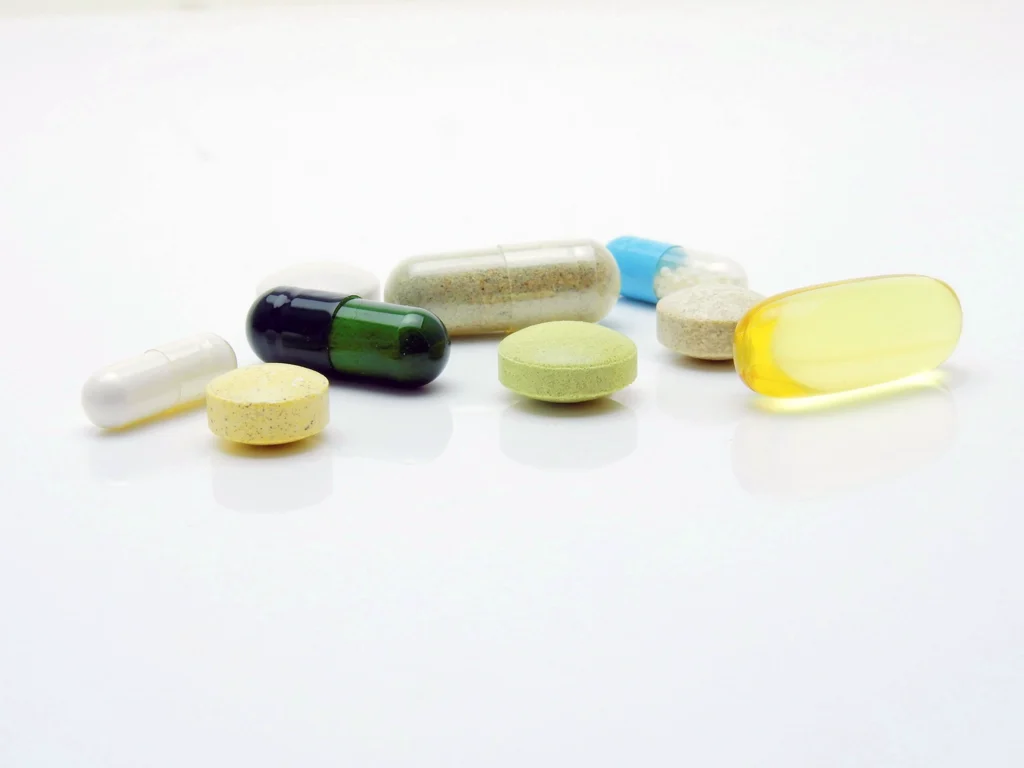
When Supplements Make Sense (And Which Are Supported By Evidence)
“Supplements should add to a healthy diet, not replace it.”
Even with the healthiest eating habits, it’s not always possible to get every nutrient your body needs from food alone. This is particularly true for the food supply from the Standard American Diet which the majority of Americans consume. Still, no supplement can replace the benefits of a balanced diet rich in whole, minimally processed foods. The role of supplements is in the name, to supplement, not substitute.
The key is knowing when a supplement makes sense and which ones are backed by strong clinical research. Below are four supplements where the evidence is most consistent, along with practical ways to apply it.
Creatine: Strength, Power, and Healthy Aging
Creatine is best known for improving strength, power, and muscle mass when combined with resistance training in younger adults, but it also has benefits for older adults looking to preserve muscle function and slow sarcopenia. Those who eat little to no meat or fish, such as vegetarians, may see greater gains because their baseline creatine levels are lower. Emerging research also suggests cognitive benefits under certain conditions, such as sleep deprivation. A typical supplemental dose is 5-10 grams per day, with or without a short loading phase.
Practical Takeaways
- Best paired with training. Works most effectively alongside resistance or high-intensity exercise.
- Dose consistently. Take 5-10 g/day; a 5–7 day loading phase of 20 g/day (split into 4 doses) can speed up saturation but isn’t required.
- Vegetarians may benefit more. Lower baseline levels can lead to more noticeable improvements.
- Safe for most healthy adults. Kidney disease or certain medical conditions require professional guidance before use.
Polyphenols: Plant Compounds with Wide-Reaching Benefits
Polyphenols are naturally occurring compounds (“phytonutrients”) found in a wide range of plant foods, including tea, berries, cocoa, apples, and many vegetables. They are grouped into several families based on their chemical structure, with flavonoids (like flavan-3-ols and quercetin), lignans, stilbenes (like resveratrol), and phenolic acids being the main categories.
These compounds serve an important protective role in plants, and in humans, where they are broken down by our gut microbes to elucidate health benefits to our entire body, especially our gut, brain and heart.
Research shows that diets rich in polyphenols are linked to:
- Improved cardiovascular health, including better lipid profiles, lower blood pressure, and reduced risk of myocardial infarction, stroke, and type 2 diabetes. Cocoa-derived flavan-3-ols, in particular, have recently been associated with reduced cardiovascular mortality in large high quality human studies.
- Metabolic benefits, such as improved insulin sensitivity and reduced systemic inflammation.
- Brain–gut–microbiome system support: Polyphenols influence the composition and function of the gut microbiome, which in turn metabolizes these compounds into smaller, bioactive molecules that can have far-reaching effects throughout the body, including on brain function, immune balance, and metabolic health.
- Anti-inflammatory and anti-diabetic actions, demonstrated in both in vitro and in vivo experimental trials.
It has been estimated that there are some 8000 different polyphenols, and because of this variety in plant foods, the best approach is to eat a broad spectrum daily. However, consistently reaching optimal intakes can be challenging, especially in modern diets that fall short of the recommended 5 daily servings of fruits and vegetables.
That’s why standardized polyphenol blends, such as Mayer Nutrition’s first product, Synaptic Bloom, can be a useful complement to a polyphenol-rich diet, helping ensure you get a diverse mix of these compounds every day. Learn more about it here.
Practical Takeaways
- Aim for diversity in your diet. Include tea, berries, apples, cocoa, and a wide range of vegetables daily.
- Target 400–600 mg/day flavan-3-ols for cardiovascular and vascular benefits, as supported by the American Society for Nutrition.
- Gut–microbiome synergy. Polyphenols are metabolized by gut microbes into absorbable bioactive compounds that can influence brain, heath, immune, and metabolic health.
- Consider supplementation if intake is low. Blends can help maintain consistent intake when dietary variety is lacking.
Omega-3s: Filling the Gap When Fish Intake is Low
Omega 3s, specifically the long-chain forms EPA and DHA, play vital roles in cardiovascular, brain, eye, and metabolic health. Because our bodies convert plant based ALA into EPA and DHA very inefficiently, the most reliable way to boost levels is through fatty fish, or supplements when fish intake is low or you’re deficient.
- Triglycerides and heart outcomes
- Daily supplementation with approximately 1 g of EPA+DHA (375 mg DHA + 465 mg EPA) for roughly six years lowered triglyceride levels significantly, but did not reduce risks of heart attack, stroke, or cardiovascular death in general populations.
- Similarly, lower doses (~376 mg combined) in post heart attack patients did not lower major cardiovascular events in the Alpha Omega Trial.
- Trials like VITAL and ASCEND, using ~1 g/day EPA+DHA, found no benefit in primary cardiovascular disease prevention among general or diabetic populations.
- Prescription icosapent ethyl (EPA-only, 4 g/day) did reduce cardiovascular events in the REDUCE-IT trial, however this benefit appears formula specific
- Pregnancy and prenatal benefit
- The NIH now recommends that women of childbearing age consume at least 250 mg/day of EPA+DHA, with an additional 100–200 mg of DHA during pregnancy, supported by evidence showing omega 3s reduce the risk of preterm birth.
- Other health considerations
- While preliminary research links omega 3 intake with improved cognitive function, reduced inflammation (e.g., dry eye symptoms), and lower risk of age-related declines, large trials have found limited or no consistent benefits for conditions like cancer, macular degeneration, or dry eye disease.
Practical Takeaways
- Food-first is best. Strive for 2 servings/week of fatty fish like salmon or sardines; this provides about 250 mg/day EPA+DHA, aligned with both dietary guidelines and NIH recommendations.
- Supplements help fill the gap. If fish intake is limited, a 1 g/day combined EPA+DHA supplement can help meet baseline needs, though it’s not proven to prevent major cardiovascular events in otherwise healthy adults.
- Pregnancy is a special case. Supplementing with 250 mg EPA+DHA daily, plus an extra 100–200 mg DHA during pregnancy, is now NIH-endorsed to help support fetal development and reduce the risk of preterm birth.
- Higher doses require medical guidance. Prescription-level omega-3s (~4 g/day) may be appropriate for managing triglycerides or certain clinical conditions—but such decisions should be made alongside your healthcare provider.
Vitamin D: Targeted Supplementation for Those Who Need It
Vitamin D plays a critical role in bone, muscle, and immune function. Most healthy adults can meet their needs through sunlight, diet, or modest supplementation, but those with limited sun exposure, darker skin at higher latitudes, older age, or certain medical conditions are at greater risk for deficiency. A typical supplemental dose for those at risk is 800–1000 IU per day, though ideally this should be tailored based on blood levels and professional guidance.
Practical Takeaways
- Check your risk factors. Low sun exposure, darker skin, older age, obesity, or certain medical conditions increase deficiency risk.
- Test before high-dose use. Lab measurements of 25(OH)D help guide safe dosing.
- Typical dose for at-risk adults: 800–1000 IU/day, adjusted as needed.
- Avoid excessive supplementation. More is not always better, high doses without medical supervision can cause harm.
Bottom Line: Food First, Supplements Second
The foundation of long-term health remains:
- A varied, plant-forward (70%) diet with minimal to zero ultra-processed foods
- Regular physical activity
- Adequate sleep
- Stress management
- Avoiding smoking and limiting alcohol
Once those habits are in place, targeted supplements like creatine, omega-3s, vitamin D, or polyphenols can help you get the most from your healthy lifestyle. When used correctly, supplements aren’t a shortcut, they’re a way to maximize the benefits of what you’re already doing right.

E. Dylan Mayer, MS is a graduate from the University of Colorado at Boulder, with a major in Neuroscience and minor in Business. He also holds a Master’s Degree in Nutrition from Columbia University.
✓ This article was reviewed and approved by Emeran Mayer, MD