Episode 128
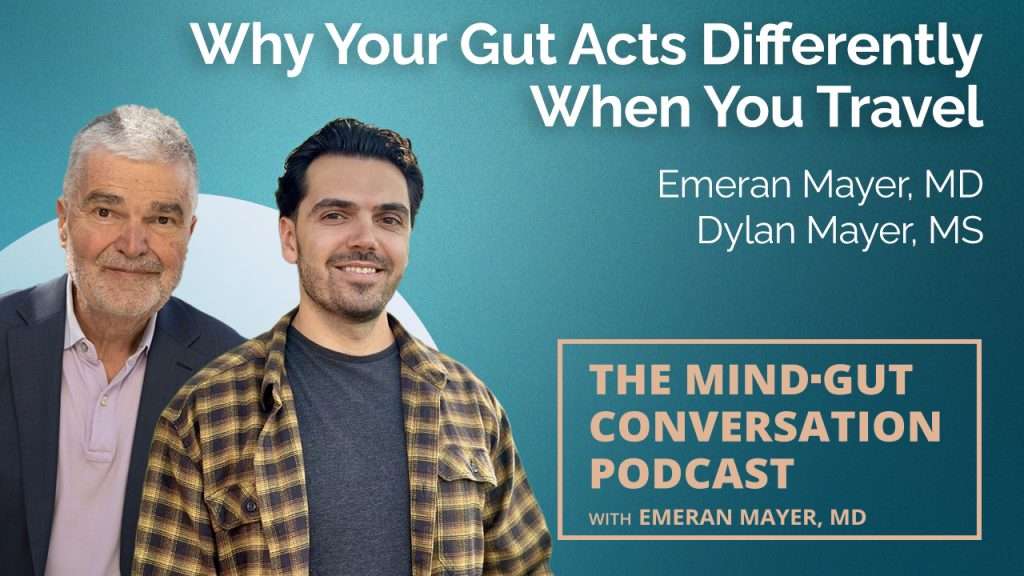
Why Your Gut Acts Differently When You Travel with Emeran Mayer, MD & Dylan Mayer, MS
Listen Now
dss
sss
In this episode of The Mind-Gut Conversation, Dr. Emeran Mayer sits down with his son Dylan Mayer, founder of Mayer Nutrition, in a café on the Piazza del Popolo in Fermo, a town on Italy’s Adriatic coast and the center of a major olive oil region. Recorded during the olive harvest, the conversation asks what happens to digestion when we travel, and what Italy’s food and daily rhythms can teach us.
Dr. Mayer draws on decades of travel and clinical experience to explain why trips so often bring constipation, diarrhea, or other digestive changes, and how the brain-gut system shapes those symptoms. They discuss why people who avoid gluten at home often eat pasta, bread, and pizza in Italy without trouble, and whether that points to the food, the mindset, or both. Dr. Mayer is clear that this comes from what he has seen in patients, not from a controlled study, and that celiac disease is a separate matter.
They also visit an olive harvest, explain why olive oil quality varies so much from one producer to the next, share how they eat on travel days, and talk about how the daily walking, close community, and local food they see in Fermo, and in blue zones like Sardinia, relate to healthy aging. The episode ends with a simple suggestion for anyone who wants their next trip to be easier on their gut.
Key Topics Covered:
- Why travel can cause constipation, diarrhea, and other digestive changes
- How stress, sleep, and uncertainty reach the gut through the brain-gut system
- What jet lag may do to the microbiome
- Gluten, food fears, and why symptoms can differ from one country to another
- How to eat on travel days and what to bring with you
- How harvest timing changes the polyphenol content of olive oil
- Why the Mediterranean lifestyle is more than a diet
- One habit to try on your next trip
This is a practical conversation for anyone who wants to travel without packing their food anxiety along with their luggage.
Chapters
0:00 – Introduction
1:19 – Why Travel Disrupts Digestion
3:36 – Gluten, Jet Lag, and Food Fears
8:45 – Dr. Mayer’s Routine When Traveling
11:35 – Eating Locally and the Olive Harvest
15:13 – The Mediterranean Lifestyle
16:52 – Advice For Eating When Traveling
18:50 – Polyphenols in The Mediterranean Diet
19:50 – Dr. Mayer’s Opinion on Alcohol
21:21 – Food Anxiety & Biohacking Fatigue
23:25 – Live Like a Local
24:30 – Dr. Mayer’s One Recommendation to Try on Your Next Trip
Frequently Asked Questions
Why does travel affect digestion?
Dr. Mayer says it depends on the kind of trip. Business travel brings stress and lost sleep, while a relaxing vacation is much less likely to cause digestive trouble. Constipation is a common side effect, and his explanation is that the brain picks up the uncertainty of a new environment and signals the gut to slow down. He sees this as further evidence of the brain-gut connection.
Why do people often not gain weight while traveling in Italy?
Dylan and Dr. Mayer point to daily walking, often around ten thousand steps, meals shared with friends and family, and smaller portions. Dylan wonders whether differences in American food also play a role, and they acknowledge they are not citing studies on that point.
Does gluten sensitivity change in Italy?
Dr. Mayer says many Americans who believe they have non-celiac gluten sensitivity eat pasta, bread, and pizza in Italy without symptoms. He asks whether the food contains less gluten or whether the mindset changes how the gut responds, and says he has seen it often enough to know it is real. He adds that people with celiac disease should still avoid gluten.
Does jet lag affect the microbiome?
Dr. Mayer says studies in animals and in people show that brain-gut signaling is disturbed by jet lag, and he connects this to where microbes sit relative to the gut wall. He also notes that a strong sense of purpose, such as flying in for a one-day scientific meeting, can override those disturbances.
What does Dr. Mayer do about probiotics and supplements when he travels?
He does not take probiotic pills. He relies on fermented foods such as sauerkraut and yogurt and on eating the local diet. His one routine is taking a fraction of a sleep aid on the overnight flight so he sleeps through the first night in Europe.
What should you eat on a travel day?
Dylan suggests bringing fruit or no-sugar-added beef jerky instead of buying expensive airport snacks, and avoiding a sudden switch in habits. He describes how airplane soda, a treat from his childhood, is the kind of change that can upset the stomach.
Why does olive oil quality vary so much?
Dylan and Dr. Mayer describe several factors: the olive variety, how ripe the olives are when picked, and how long they sit before pressing. Riper olives give more oil with lower polyphenol content, and waiting a week or more before cold pressing lets the olives oxidize and lose polyphenols. They also describe two uses: oil higher in fatty acids for cooking, and oil higher in polyphenols to drizzle over finished food.
What is the one habit to try on your next trip?
Dr. Mayer’s answer is to live like a local and not carry a list of do’s and don’ts from social media into a new country. Dylan adds that it helps to keep a few routines that work for you while letting go of rigid health metrics. They suggest reading The Mayer Model before you travel.
Connect with Dr. Mayer
Website: emeranmayer.com
Instagram: instagram.com/emeranmayer
Facebook: facebook.com/EmeranMayerMD
LinkedIn: linkedin.com/in/emeranmayer