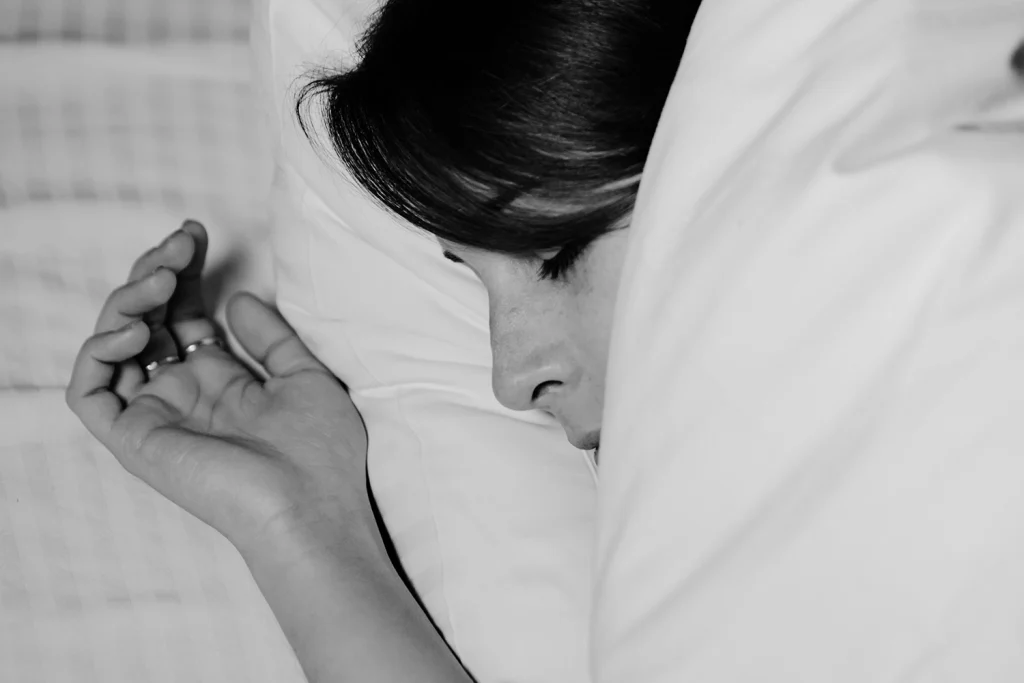
Cannabis May Help You Fall Asleep, But Is It Affecting Your Brain?
Millions of Americans struggle to get a good night’s sleep and cannabis has become an appealing solution. Whether it’s smoking before bed or taking an edible to relax, the goal is to fall asleep faster and wake up feeling rested. But what if feeling like you slept better doesn’t necessarily mean your brain got the rest it needed?
New research suggests that while cannabis may help some people fall asleep, it can also interfere with the natural stages of sleep, specifically rapid eye movement (REM) sleep. These changes raise questions about how cannabis affects memory, emotional well being, and the brain’s ability to process stress.
A recent Washington Post article examined the growing evidence surrounding cannabis and sleep. One finding stands out: people who use cannabis often report sleeping better, however lab measurements do not always support that perception.
A study published in Sleep Health in June 2026 estimated that approximately 9% of American adults use cannabis as a sleep aid. With so many people relying on cannabis for rest, understanding what happens after falling asleep is increasingly important.
Falling Asleep Faster Doesn’t Mean Sleeping Better
Sleep is not just a period when the brain shuts down. Throughout the night, it cycles through different stages that support physical recovery, memory, learning, and emotional regulation.
Researchers have been interested in tetrahydrocannabinol (THC), the psychoactive compound in cannabis because of its ability to produce drowsiness. Some studies suggest that THC can shorten the time it takes to fall asleep. However, there is an important difference between falling asleep quickly and getting restorative sleep.
In one small study with 18 healthy adults, nine regular cannabis users and nine people who had never used cannabis, researchers monitored participants sleep and found no clear evidence that cannabis improved sleep.
This adds to a broader pattern. Although cannabis users frequently report sleeping better, objective measurements sometimes reveal poorer sleep quality, including more awakenings throughout the night.
What Happens to Your Dreams?
One of the more interesting findings involves REM sleep, which is the stage of sleep associated with vivid dreaming.
During a usual night, the brain cycles between lighter sleep, deep sleep, and REM sleep. Each stage plays an important role but REM sleep is particularly associated with memory consolidation, learning, and emotional processing.
Studies suggest that THC can reduce the amount of time spent in REM sleep, which may explain why some regular cannabis users report dreaming less frequently or having difficulty remembering their dreams.
After sustained use, some individuals experience “REM rebound,” a temporary increase in REM sleep with emotionally intense dreams.
One possible explanation involves the body’s endocannabinoid system, which helps regulate sleep, mood, and stress responses. THC interacts with receptors in this system and with prolonged exposure the brain can adapt by reducing their sensitivity.
When ones’ cannabis use stops, the system may need time to readjust. During this period, some individuals experience insomnia, nighttime awakenings, and intense dreams.
For people who depend on cannabis to sleep, these withdrawal symptoms can make quitting difficult, sometimes encouraging them to resume use to avoid another sleepless night.
Could Cannabis Affect Emotional Health?
The relationship between cannabis, sleep, and emotional well being is complicated.
Researchers believe REM sleep may help the brain organize memories and process emotionally significant experiences. If cannabis consistently reduces time spent in REM sleep, could this interfere with how we respond to stress? Scientists do not yet know.
Interestingly, reducing disturbing dreams may actually benefit certain individuals. A small 2015 placebo-controlled study involving military personnel with treatment-resistant post-traumatic stress disorder (PTSD) found that a synthetic THC-like medication reduced nightmares and some symptoms of heightened arousal. However, reducing nightmares in individuals with PTSD is different from improving sleep.
Although REM sleep is associated with emotional regulation, researchers have not established whether cannabis related REM suppression causes problems with memory or emotional health.
What the Research Can and Cannot Tell Us
Despite growing interest in cannabis as a sleep aid, many studies remain relatively small, and cannabis products vary widely in their concentrations of THC, cannabidiol (CBD), and other compounds, THC and CBD also appear to affect sleep differently. While THC may promote drowsiness, CBD has not consistently demonstrated a direct sleep-promoting effect.
Additionally, Long-term consequences remain uncertain. A 2025 study published in JAMA Neurology involving more than 6 million adults found that individuals requiring emergency care or hospitalization related to cannabis use had a 72% higher risk of receiving a dementia diagnosis within the following five years.
That finding is concerning but it does not establish that cannabis causes dementia. The study examined individuals with serious cannabis related medical encounters, not occasional users, and other confounding variables may explain part of the association.
Better Sleep Requires More Than Feeling Sleepy
For someone struggling with insomnia, cannabis may seem like a convenient solution, especially when it provides immediate relaxation or helps them fall asleep faster. But sleep quality involves much more than how quickly we close our eyes.
Our brains depend on a carefully coordinated sequence of sleep stages to support memory, learning, and emotional well being. Altering those stages may have consequences that are not immediately noticeable the next morning.
For persistent insomnia, evidence based approaches such as cognitive behavioral therapy for insomnia (CBT-I), consistent sleep schedules, and addressing underlying stress or anxiety may provide more sustainable relief.
The message is not that everyone using cannabis will experience poor sleep or lasting harm. Rather, feeling well rested and obtaining restorative sleep are not always the same thing.
As cannabis becomes increasingly common in conversations about sleep and wellness, perhaps we should be asking a different question.
Not simply whether cannabis helps us fall asleep but whether the sleep we’re getting is truly giving our brains what they need.
Some content in this article may have used AI-assisted tools for research, grammar, or outlining. All articles are reviewed and approved by our human editorial team.

Richard Tirado is a graduate of UCLA and a medical student at the Charles R. Drew University, College of Medicine. His personal experience with ulcerative colitis has shaped his interest in the brain-gut-microbiome connection, including how biopsychosocial factors, stress, and trauma can influence health and disease.
✓ This article was reviewed and approved by Emeran Mayer, MD