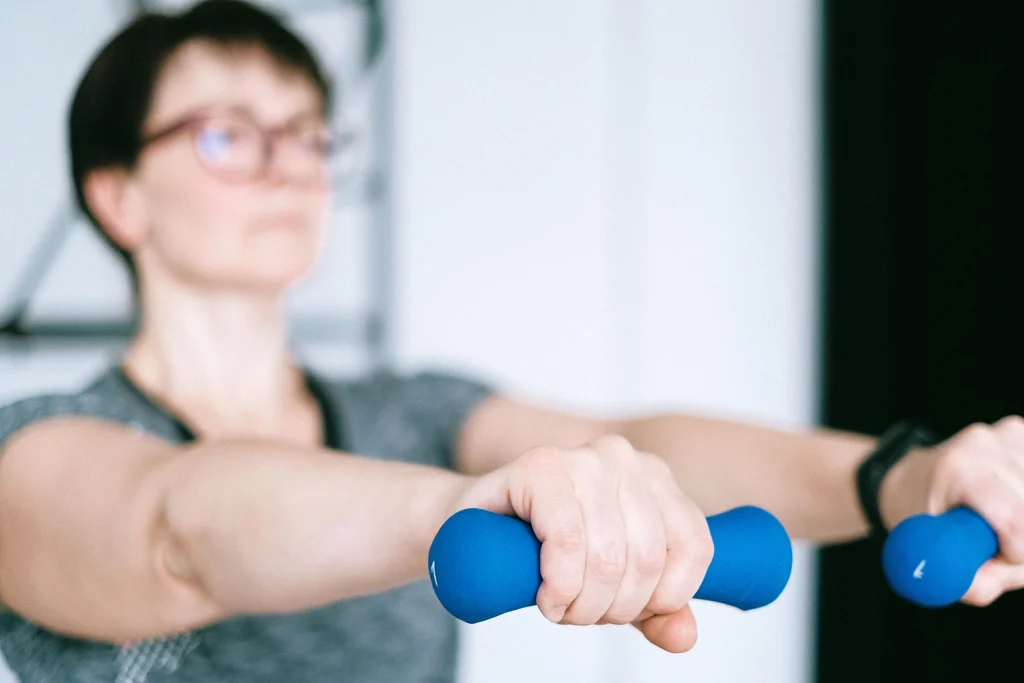
Four Things to Reduce Age-Related Muscle Loss
We hear a lot about changes that come with getting older: our metabolism, our skin, our energy levels. But muscle loss is another change worth noticing long before our later years.
Age-related muscle loss, often discussed under the umbrella of sarcopenia, can begin during middle age and gradually progress over time. One review estimates that muscle mass begins declining at roughly 1% per year from middle age, although the rate varies considerably between individuals. Researchers also point to something called anabolic resistance, where aging muscle becomes less responsive to signals from nutrition and physical activity.
Skeletal muscle plays an important role in movement, metabolism, and overall health. Research has linked the loss of muscle mass and function with frailty, disability, and metabolic changes, while exercise can help preserve muscle and improve insulin sensitivity as we age. In practical terms, maintaining muscle can help support everyday things we want to keep doing – anything from carrying groceries, getting up from a chair, climbing stairs, to simply staying active.
Here are four practical things we can actually do to reduce age-related muscle loss:
1. Make strength training a regular habit
Walking, hiking, and other forms of cardio are fantastic for your health, but resistance training provides a particularly important stimulus for maintaining muscle and strength. Research consistently shows that older adults can still respond to resistance training. In fact, a systematic review of adults 75 and older found significant improvements in muscle strength following resistance training.
Regular resistance training may look like working your major muscle groups with movements such as squats, hinges, pushes, and pulls. One important principle is progressive overload, which simply means gradually challenging your muscles more over time – whether that’s increasing the weight, adding repetitions, or progressing to a more difficult variation. The goal isn’t to leave every workout completely exhausted. It’s to challenge your muscles enough that they have a reason to adapt. https://pubmed.ncbi.nlm.nih.gov/35608815/ on progressive resistance training strongly supports its ability to improve strength in older adults.
2. Prioritize protein throughout the day
Exercise provides the stimulus to maintain or build muscle, but your body still needs the raw materials for this. Protein becomes particularly important as we get older because aging can reduce the muscle protein synthesis response to protein intake – a phenomenon known as anabolic resistance. Interestingly, physical activity may help improve the muscle’s responsiveness to dietary protein.
Rather than saving most of your protein for dinner, consider including a meaningful source at each meal. Around 25-30 grams of high-quality protein per meal may be a useful target for stimulating muscle protein synthesis in older adults. However, individual protein needs will vary based on factors like body size, activity level, and overall health. This can look very simple, like eggs and Greek yogurt at breakfast, a chicken or tofu bowl at lunch, and salmon with vegetables and rice at dinner.
3. Don’t overlook recovery
More exercise isn’t always better. Muscle remodeling happens during the recovery period following exercise, which means adequate food, rest, and sleep all deserve a place in the conversation. Sleep may be especially important. In controlled studies of healthy younger adults, both acute sleep deprivation and several nights of restricted sleep reduced measures of muscle protein synthesis. We still need more research specifically in older populations, but these findings offer another reason to take sleep seriously alongside training and nutrition.
4. Think basics before supplements
There’s no shortage of supplements promising better strength, recovery, and longevity. But one of the better-researched options is creatine monohydrate. A meta-analysis of randomized trials found that older adults taking creatine alongside resistance training experienced greater gains in lean tissue mass and strength than those resistance training without it. Still, we should view creatine as an addition to, rather than a replacement for, the basics. More recent research continues to support a modest strength benefit when creatine is paired with resistance training, while its additional effects on muscle mass and physical function remain less certain.
The encouraging thing about muscle is that it remains adaptable as we age. Getting older may change how our bodies respond to exercise and nutrition, but research shows that even adults well into later life can improve muscle strength with resistance training. If anything, this gives us a good reason to start thinking about muscle earlier. The strength you build and maintain today is an investment in what you’ll still be able to do decades from now.
Some content in this article may have used AI-assisted tools for research, grammar, or outlining. All articles are reviewed and approved by our human editorial team.

Monica Echeverri holds a Master of Science in Human Nutrition and Functional Medicine from the University of Western States and currently works as a food photographer, writer, and recipe developer.
✓ This article was reviewed and approved by Emeran Mayer, MD