9 Healthy Habits for Longevity
It’s easy to get swept up in messaging that says we need the latest supplement or a perfectly optimized morning routine to live a long, fulfilling life. We spend a lot of time talking about how to live longer, but much of the groundwork for healthy aging happens long before we get there, particularly in our 40s, 50s and 60s. Starting today, in any decade, can still make a difference. And many of the habits associated with healthy aging are ordinary: moving your body, eating enough protein, sleeping reasonably well and keeping up your friendships.
Here are nine that are well researched and worth paying attention to.
1. Add some intensity to your cardio
Walking is fantastic for our health, but pushing the cardiovascular system a little harder now and then adds benefits of its own. Cardiorespiratory fitness, essentially how well our heart, lungs and muscles work together, is strongly associated with longevity and with our ability to stay active as we get older. Interval training is one way to build it. Instead of spending 30 minutes at the same pace, alternate short bursts of hard effort with recovery, for example 30 seconds of running or cycling hard followed by 30 seconds of recovery.
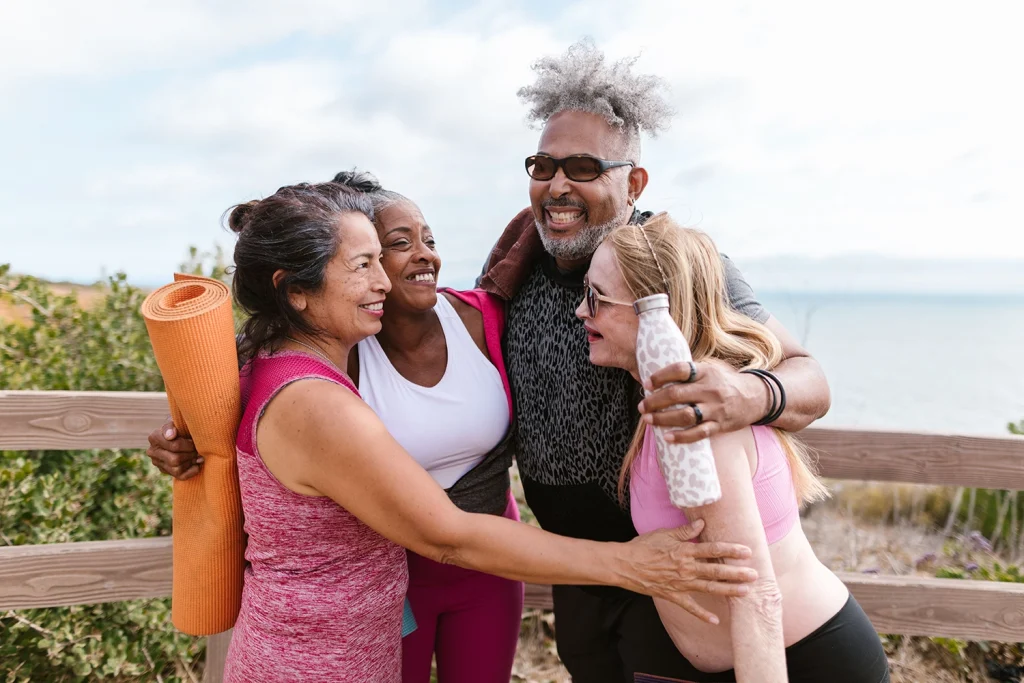
2. Treat your friendships like part of your health routine
We talk constantly about food and exercise in the wellness world, but we underestimate how much relationships matter to our health. Strong social ties have consistently been associated with better health and longevity. Keeping friendships going as an adult is easier said than done, of course. Between work, family and everyday responsibilities, coordinating schedules can become an event in itself. One solution is to combine socializing with something you’re already doing, like walking with a friend, taking a workout class together or grabbing groceries together.
3. Feed your gut microbes
The gut microbiome is one of the most interesting areas of health research. Several studies show that our gut microbes interact closely with our food and our immune system, and that they influence inflammation and other aspects of healthy aging. Diets that support a diverse, resilient microbiome are high in variety and plant-forward (about 75% fruits and vegetables), with very little sugar and no ultra-processed foods. Fermented foods like yogurt, kefir, kimchi and sauerkraut help too. You could add yogurt to breakfast or kimchi to a rice bowl one or two days a week and build from there.
4. Prioritize building and maintaining muscle
If there’s one thing worth being more intentional about as we age, it’s maintaining muscle. We gradually lose muscle mass during adulthood, and the decline speeds up later in life. Losing too much can contribute to frailty and make everyday activities, like climbing stairs, carrying groceries or getting up from a chair, much harder. Resistance training is one of the best ways to push back, because it gives our muscles the stimulus they need to maintain and build strength. Body-weight exercises, resistance bands and dumbbells all work. As you get stronger, increase the challenge gradually so your muscles keep adapting.
5. Include protein at every meal
Maintaining muscle depends on protein as much as on training. Eating enough protein, particularly alongside resistance training, helps support muscle mass as we age. Rather than packing most of it into one meal, include a quality source throughout the day. Eggs, Greek yogurt, cottage cheese, fish, poultry, tofu, beans and lentils are all good options. Nobody needs to “protein-max.” Just make protein part of your plate at every meal.
6. Move outside of your workouts
Research suggests that accumulating roughly 7,000 steps per day is associated with meaningful health benefits, so you don’t necessarily need the often-cited 10,000. Look for small chances to move more throughout your day: take the stairs, walk while you’re on the phone, park farther from the entrance or take a short walk after a meal. Repeated day after day, those extra minutes add up to significant improvements over time.
7. Stay on top of recommended vaccines
Recent research has found that shingles vaccination is associated with a lower risk of dementia and cognitive decline. Scientists are still investigating why. One hypothesis is that preventing certain infections also reduces some of the inflammation those infections create in the brain and body. It’s one more reason to stay on top of preventive healthcare and to ask your doctor which vaccines are right for your age.
8. Know your family’s health history
Lifestyle matters tremendously, but genetics matter too. Family history isn’t a prediction of your lifespan, yet knowing whether close relatives have had cardiovascular disease, diabetes, dementia, osteoporosis or certain cancers can help you make more informed decisions about your health. Knowing roughly how old they were when they developed those conditions is useful too.
9. Get consistent with your sleep
One part of sleep health that plays a strong role in longevity is regularity. Research suggests that keeping relatively consistent sleep and wake times may predict health and longevity as well as, or better than, the total number of hours you sleep. Irregular sleep patterns have been associated with 14% to 34% higher mortality. You don’t need a perfect nighttime routine. Choose a realistic bedtime and stay fairly close to it.
Some content in this article may have used AI-assisted tools for research, grammar, or outlining. All articles are reviewed and approved by our human editorial team.

Monica Echeverri holds a Master of Science in Human Nutrition and Functional Medicine from the University of Western States and currently works as a food photographer, writer, and recipe developer.
✓ This article was reviewed and approved by Emeran Mayer, MD
- 7000 Steps, Cardiorespiratory Fitness, Consistent Bedtime, Daily Steps, Dementia Risk, Family Health History, Fermented Foods, Frailty, Gut Microbiome, Healthy Aging, Interval Training, Longevity Habits, Muscle Loss, Plant-Forward Diet, Protein Intake, Resistance Training, Sarcopenia, Shingles Vaccine, Sleep Regularity, Social Connection