PODCAST DIGESTS
Digging deeper into some of our most notable podcasts to explore all of the information in-depth.
LET'S TAKE A DEEP DIVE INTO PODCAST #99
Your Health Runs on Energy, and Your Mitochondria Are at the Center of It
SUMMARY
We often think about health in terms of symptoms. Do we have enough energy? Are we sleeping well? Is our digestion working properly? Are we able to think clearly and stay resilient when life becomes stressful?
But underneath all of those experiences is something remarkably fundamental:
Every cell in your body requires energy to function.
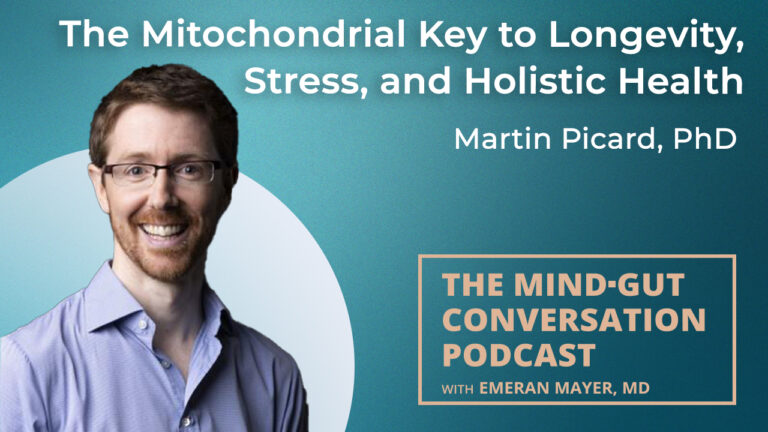
That simple idea was at the heart of my recent conversation with mitochondrial researcher Dr. Martin Picard. Although mitochondria have long been recognized as the “powerhouses” of our cells, we’re beginning to understand that their role extends far beyond energy production.
They’re deeply involved in how we respond to stress, how we adapt to our environment, and perhaps even how we experience health itself.
Tiny Organelles With an Extraordinary Story
One of the reasons mitochondria are so fascinating is their history.
Billions of years ago, they were free-living bacteria. Over time, they formed a remarkable partnership with early cells, one that made complex life possible.
That ancient relationship still shapes our biology today.
Mitochondria aren’t static structures quietly sitting inside our cells. They’re constantly changing, dividing, merging, repairing themselves, and responding to signals from the rest of the body.
In many ways, they behave more like a living network than a collection of tiny batteries.
Why Stress Feels So Draining
One of the themes that resonated most with me during our conversation is the idea that stress is fundamentally an energy-demanding process.
Whenever your body perceives a challenge, whether it’s physical illness, emotional distress, poor sleep, or even ongoing psychological pressure, it shifts resources toward immediate survival.
That’s exactly what it’s designed to do.
The problem arises when that state becomes chronic.
If your body is continually investing energy in responding to stress, it has fewer resources available for maintenance, repair, and recovery. Over time, that imbalance may help explain why chronic stress contributes to so many different health problems.
Rather than thinking of stress only as a hormonal response, it’s also helpful to think of it as a shift in how the body allocates its energy.
The Gut and the Cell Speak the Same Language
Listeners of this podcast know that much of my research has focused on the gut microbiome.
What I find especially exciting is that we’re beginning to understand just how closely the microbiome and mitochondria are connected.
The microbes living in our digestive tract produce a wide range of metabolites when they ferment dietary fiber. Among the most important are short-chain fatty acids like butyrate, compounds that help nourish the cells lining the intestine and also support healthy mitochondrial function.
This creates another beautiful example of the body’s interconnectedness.
The foods we eat influence the microbiome.
The microbiome produces metabolites.
Those metabolites help support the mitochondria that generate energy throughout the body.
It’s another reminder that we can’t truly separate nutrition, the gut, and cellular health. They’re all part of the same biological conversation.
Energy Influences More Than We Once Thought
One area of research that continues to evolve is the relationship between mitochondrial function and our mental and emotional well-being.
We’re learning that the body’s energy systems and the brain communicate continuously. While emotions can’t be reduced to mitochondrial function alone, it’s becoming increasingly clear that healthy cellular energy production supports many of the processes involved in resilience, cognition, and overall well-being.
This fits well with a systems biology perspective.
Health rarely depends on a single molecule or one isolated pathway. Instead, it emerges from countless interactions taking place throughout the body every second of every day.
Looking Beyond Disease
Traditional medicine has made extraordinary advances in treating disease, but much of its focus remains on identifying what has gone wrong.
Conversations like this invite us to ask a different question:
What allows the body to function well in the first place?
That shift in perspective doesn’t replace conventional medicine. Instead, it expands our understanding of health by emphasizing resilience, adaptability, and the body’s remarkable ability to maintain balance when its fundamental systems are well supported.
Supporting Your Body's Energy Systems
While the science of mitochondria is advancing rapidly, many of the practical lessons remain surprisingly familiar.
Regular physical activity encourages healthy mitochondrial function.
Adequate sleep allows the body time to repair and recover.
A diet rich in diverse, fiber-containing plant foods helps support both the gut microbiome and the metabolites that nourish our cells.
Managing chronic stress isn’t simply about feeling calmer. It’s also about giving the body the opportunity to redirect energy toward restoration instead of constant defense.
These aren’t isolated habits.
They’re all working together to support the same interconnected system.
A New Way to Think About Vitality
One of the things I enjoyed most about my conversation with Dr. Picard is that it reminds us how much there is still to learn.
Health isn’t simply the absence of disease.
It’s the capacity of the body to adapt, recover, and respond to life’s constant challenges.
The more we learn about mitochondria, the microbiome, and the intricate communication between the body’s many systems, the more we appreciate that vitality doesn’t come from one organ or one pathway.
It emerges from the remarkable cooperation taking place within us every moment of every day.
And understanding that interconnectedness may be one of the most exciting frontiers in modern medicine.
FAQ
What are mitochondria?
Mitochondria are tiny structures found inside nearly every cell in your body. They’re best known for producing the energy your cells need to function, but they’re also involved in communication, stress responses, immune function, and other essential biological processes.
Why are mitochondria called the “powerhouses” of the cell?
Because they convert the nutrients you eat and the oxygen you breathe into ATP, the primary form of energy used by your cells. Without healthy mitochondria, your body wouldn’t have the energy required for everything from muscle movement to brain function.
How does chronic stress affect mitochondria?
Stress increases your body’s energy demands. During short-term stress, this is a normal and helpful response. But when stress becomes chronic, more energy is devoted to coping with ongoing challenges, leaving fewer resources available for repair, recovery, and maintaining healthy cellular function.
What is the connection between the gut microbiome and mitochondria?
Your gut microbes break down dietary fiber and produce compounds called short-chain fatty acids, including butyrate. These compounds help support the cells lining your intestine and contribute to healthy mitochondrial function, demonstrating how closely gut health and cellular energy production are connected.
Can improving gut health support cellular energy?
Emerging research suggests it can. Eating a variety of fiber-rich plant foods helps nourish beneficial gut microbes, which produce metabolites that support healthy communication between the gut and many organs, including the cells that contain mitochondria.
Do mitochondria affect brain health?
Yes. Healthy mitochondria provide the energy needed for brain cells to function efficiently. Researchers continue exploring how mitochondrial function may influence cognitive performance, resilience to stress, and overall neurological health.
What are some everyday habits that support healthy mitochondria?
Many of the same habits that support overall health also benefit mitochondrial function, including:
- Regular physical activity
- Getting adequate sleep
- Eating a diverse diet
- Managing chronic stress
- Supporting a healthy gut microbiome
Can lifestyle changes improve mitochondrial function?
Research suggests that lifestyle plays a key role in supporting mitochondrial health. While no single habit is a cure-all, consistent healthy practices in exercise, restorative sleep, stress management, and a healthy diet help create an environment where mitochondria can thrive.
Why is cellular energy important even if I don’t feel sick?
Cellular energy powers every process in your body, including digestion, immune function, movement, thinking, and tissue repair. Supporting healthy energy production isn’t just about treating disease… it’s about helping your body adapt, recover, and function at its best.