PODCAST DIGESTS
Digging deeper into some of our most notable podcasts to explore all of the information in-depth.
LET'S TAKE A DEEP DIVE INTO PODCAST #111
Brain Health Is a Lifestyle
SUMMARY
We often talk about brain health as though it were something separate from the rest of our health.
We exercise for our heart. We think about food for our metabolism. We take care of our gut. And only when something begins to go wrong with memory, cognition, mood, or pain, do we begin thinking seriously about the brain.
Yet the brain is arguably the most sophisticated organ in the human body, and it is constantly receiving information from virtually every other system.
So what would happen if we began treating brain health not as something we address when there is a problem, but as a lifestyle?
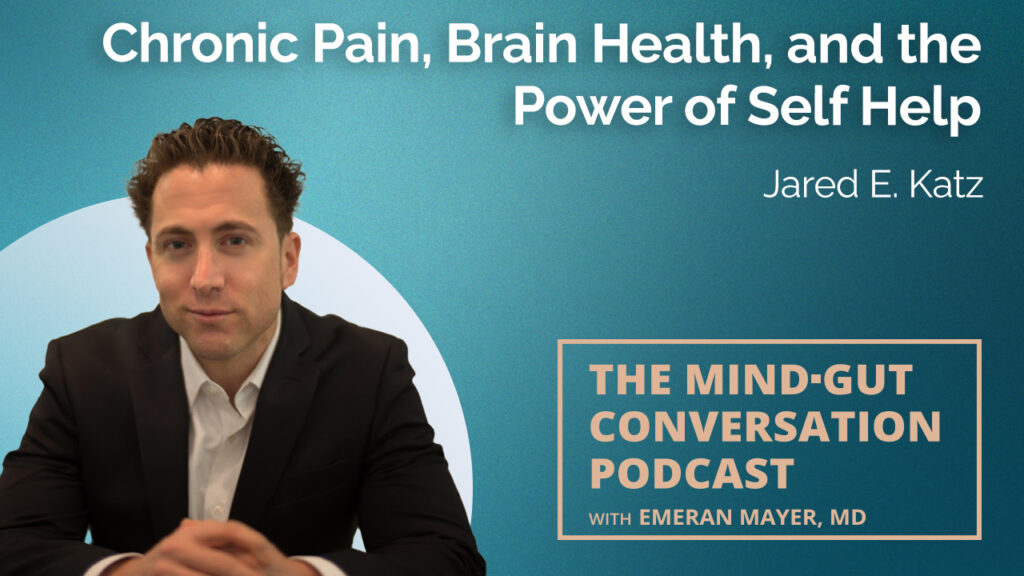
That question was at the center of a recent conversation I had with Jared Katz, author of Retrain the Brain: Self-Help for Traumatic Brain Injury.
Jared’s story begins more than two decades ago, when he was struck in the back of the head while breaking up a fight in college.
The injurt left him with several intracerebral hematomas and led to the discovery of two rare conditions: Chiari malformation and syringomyelia.
Before the injury, Jared remembers living without significant pain. Afterward, chronic pain became part of everyday life.
But what interested me most about this conversation was not what happened to him, but what he did next.
When Recovery Requires Rebuilding Your Life
We tend to think about brain health as something that happens inside the skull.
- Memory
- Cognition
- Mood
- Pain
- Neurodegeneration
But the brain does not operate in isolation. It is constantly receiving information from the gut, immune system, metabolic system, muscles, sensory organs, and the environment around us.
- What we eat matters
- How we sleep matters
- Whether we move matters
- Relationships matter
- Even the ways we challenge and engage our minds MATTER
This is why I believe we need to expand the way we think about protecting the brain.
The question isn’t simply: What can I do for my brain?
A better question may be: What kind of biological environment am I creating for my brain every day?
The Brain Is Not a Machine
Much of modern medicine has been built around identifying individual problems.
For what is broken.
Isolate it.
Fix it.
This model has been enormously successful in many areas of medicine, particularly in acute care. But biological systems are far more complex than machines with replaceable parts.
→ The brain communicates with the gut → the gut communicates with the immune system → the immune system influences the brain → sleep affects cognition and metabolism → movement influences circulation, mood, and neural function → food influences the gut microbiome, which produces metabolite that signal throughout the body → social experiences influence our nervous system and stress response.
These are not independent processes.
They are components of one highly interconnected biological system.
That is why improving brain health cannot be reduced to finding the right supplement, completing a crossword puzzle, following a particular diet, or exercising several times a week.
And one of those behaviors may be beneficial.
But the more interesting question is what happens when they begin working together.
Building an Environment That Supports the Brain
There is no single formula for brain health, but several lifestyle factors repeatedly emerge as important:
- Nutrition
- Physical activity
- Restorative sleep
- Cognitive stimulation
- Social engagement
What is striking about this list is how ordinary it looks.
There is nothing particularly futuristic about taking a walk, eating a plant-rich meal, getting adequate sleep, learning something new, or having a meaningful conversation.
Yet we often overlook these behaviors precisely because they appear so simple.
We are naturally attracted to breakthroughs: the new supplement, technology, medication, test, or intervention that promises dramatic results.
Biology usually works gradually.
Small signals repeated consistently can alter the environment in which our cells, microbes, immune system, and brain function.
A useful way to think about this comes from a baseball analogy shared by Jared Katz, You don’t need to hit a home run every day. Start by hitting singles.
- Eat one healthy plant food
- Take a walk
- Call someone you care about
- Read something challenging
- Protect your sleep
Then do it again tomorrow.
The individual action may seem insignificant.
The pattern is not.
The Gut Belongs in the Brain-Health Conversation
It is difficult for me to discuss brain health without considering the brain-gut microbiome system.
What we eat feeds not only our human cells, but also the trillions of microorganisms living in our gastrointestinal tract.
These microbes interact closely with the intestinal immune system and generate metabolites that can influence physiology far beyond the gut.
This creates important connections between diet, the microbiome, immune signaling, inflammation, metabolism, and brain function.
In other words, eating for brain health is not simply about identifying a particular “brain food.”
It is about considering the biological chain of events that begins every time we eat.
A diet rich in a variety of plant foods provides substrates for gut microbes. Those microbes transform components of our diet into signaling molecules. These signals interact with the gut, immune system, and other organs.
The brain is part of that network.
This systems perspective also helps explain why there is unlikely to be one perfect diet for every person.
One of the most useful habits we can develop is simply paying attention.
How do different foods make you feel?
How does eating late affect your sleep?
Do large meals make you feel sluggish?
Which patterns can you actually maintain?
This is not an argument for obsessively monitoring every response from your body.
It is an argument for becoming an active observer of it.
Movement Sends a Signal to the Brain
Physical activity is another example of something we tend to compartmentalize.
We exercise for cardiovascular health.
We exercise to maintain muscle.
We exercise to manage body weight.
But movement is also an important source of information for the brain.
The brain is continually adapting in response to experience, and physical activity is one part of that experience.
Importantly, movement does not have to begin with an elaborate exercise program.
After his traumatic brain injury, Jared found himself spending long periods in his room playing video games. He eventually made up a simple rule: whenever he scored a touchdown in the game, he would stand up and stretch.
This is not some sophisticated rehabilitation protocol.
But it combined cognitive engagement with physical movement and, more importantly, gave him a way to begin.
That distinction matters.
The ideal behavior is not very useful if we cannot sustain it.
So maybe the better question is: What can I actually do today?
The Brain Needs to Be Used
Cognitive health has also become an industry, with brain-training programs, apps, puzzles, games, supplements, and increasingly sophisticated technologies promising to keep our minds sharp.
Some may prove useful… but we should not lose sight of something much more fundamental.
The brain needs engagement.
Learning a language challenges the brain.
Playing music challenges the brain.
Reading does.
Writing does.
Learning a new skill does.
Having a thoughtful conversation does.
For Jared, writing stories and screenplays became an unexpected form of cognitive rehabilitation. Writing required him to organize ideas, develop characters, remember details, maintain continuity, and structure complex narratives.
Nobody prescribed it.
But it was meaningful enough that he kept doing it.
That may be one of the most important characteristics of brain-health practice.
If you enjoy it, you are far more likely to continue.
Social Connection Is Biology
Social interaction may be one of the most underestimated components of brain health.
Human beings evolved as profoundly social organisms.
Our brains developed within families, tribes, and communities where survival required communication, cooperation, emotional awareness, and relationships.
Yet social connection is rarely discussed with the same excitement as a new supplement or health technology.
Perhaps it should be.
Conversation challenges the brain. Relationships provide stimulation. Connection influences our emotional state and stress response systems.
Isolation, by contrast, changes the environment in which the nervous system operates.
Brain health, therefore, does not occur only inside the brain.
It is influenced by the world it lives in.
What Chronic Pain Teaches Us About Resilience
This systems perspective becomes particularly important when we consider chronic illness and chronic pain.
Medicine often approaches disease with a straightforward expectation:
- Find the problem
- Treat the problem
- Remove the problem
But what happens when the problem cannot simply be removed?
More than 20 years after his traumatic brain injury, Jared continues to live with chronic pain associated with Chiari malformation and syringomyelia.
The pain did not just magically disappear because he changed his lifestyle.
That is an important distinction.
Yet pain also did not prevent him from becoming active, creative, socially engaged, and productive.
This suggests a different question, one that may be useful for many people living with chronic conditions:
How can we improve the function and resilience of the entire system, even when we cannot completely eliminate the problem?
Resilience doesn’t mean pretending pain is absent.
It doesn’t mean thinking positively enough to make disease disappear.
It means supporting the biological and psychological systems that allow us to function, adapt, and participate in life despite the challenges that remain.
There Is No Single Brain-Health Intervention
One of the greatest problems with our current approach to health is our tendency to search for the most important variable.
What is the best fiet?
What is the best exercise?
What is the best supplement?
What is the single most important thing I can do for my brain?
Biology rarely offers answers that simple.
A person may eat an excellent diet while sleeping poorly.
Another may exercise every day while living with enormous chronic stress.
Someone else may take multiple supplements while remaining socially isolated and physically inactive.
Each of these behaviors sends signals into the same interconnected biological system.
Rather than endlessly searching for the one intervention that matters most, we may be better served by creating a pattern of living that supports the brain from multiple directions.
- Nutrition
- Movement
- Sleep
- Cognitive challenge
- Social connection
Not one instead of the others.
All working together.
Brain Health Is a Practice
There is another reason I find this perspective so important.
Our brains and bodies never stop changing…
We age.
Our microbiomes change.
Our sleep changes.
Environments change.
Exposure to stress changes.
Physical capabilities change.
Science changes, too, and new therapeutic approaches will continue to emerge.
Supporting brain health therefore cannot be something we “finish.”
It is an ongoing relationship with a dynamic biological system.
This is why I like the idea that recovery never truly ends.
Not because we spend our lives trying to fix ourselves. But because adaptation is part of being alive.
What supports us at one stage of life may need to change at another.
Brain health is not something you acheive through one dramatic intervention.
It is something we practice everyday:
- In what we eat
- How we move
- How we sleep
- How we challenge our minds
- How we connect with other people
- And how carefully we continue listening to our own bodies
We don’t need to hit a home run every day.
We just need to keep hitting singles.
FAQ
Why should we think of brain health as a lifestyle rather than a single intervention?
The brain doesn’t function independently from the rest of the body. It continuously communicates with the gut, immune system, metabolism, and nervous system. Nutrition, movement, sleep, mental stimulation, and social relationships all influence the environment in which our brains function. Rather than relying on one supplement, diet, or exercise routine, supporting brain health means developing consistent habits that work together over time.
How does gut health influence brain health?
The gut and brain communicate through a complex network involving the nervous system, immune system, and gut microbiome. Microorganisms in our digestive tract help transform components of our food into metabolites that can influence processes throughout the body, including those connected to brain function. Eating a variety of plant-rich foods helps support this microbial ecosystem and the important communication pathways linking the gut and brain.
Does exercise have to be intense to benefit the brain?
Not necessarily. Physical activity provides important signals that influence circulation, mood, and brain function, but meaningful movement doesn’t always require an elaborate exercise program. Walking, stretching, and incorporating movement into everyday activities are practical places to begin. As Jared Katz’s experience illustrates, finding manageable ways to move consistently may be more valuable than pursuing an ambitious routine that’s difficult to maintain.
What kinds of activities help keep the brain engaged?
Activities that encourage learning, creativity, and meaningful mental engagement can help challenge the brain. Reading, writing, learning a language, playing music, developing a new skill, or having thoughtful conversations are all examples. The key is finding activities that are both stimulating and enjoyable. When something feels personally meaningful, we’re often more likely to continue doing it.
Can lifestyle changes help someone living with chronic pain or a traumatic brain injury?
Lifestyle changes may help support overall functioning, resilience, and quality of life, even when an underlying medical condition or chronic pain cannot be eliminated. Jared’s experience demonstrates that movement, creativity, social engagement, and meaningful activities can remain important parts of life despite ongoing challenges. These practices are not substitutes for appropriate medical care, but they may complement it by supporting physical and psychological well-being.
What's the most important first step toward better brain health?
Start small and focus on consistency. Rather than trying to change everything at once, choose one manageable action, such as taking a walk, eating an additional plant food, protecting your sleep, learning something new, or connecting with someone you care about. Over time, these small choices can become part of a broader lifestyle that supports brain health. As Jared reminds us, we don’t need to hit a home run every day. We just need to keep hitting singles.