PODCAST DIGESTS
Digging deeper into some of our most notable podcasts to explore all of the information in-depth.
LET'S TAKE A DEEP DIVE INTO PODCAST #100
Why the Future of Mental Health May Begin in the Soil
SUMMARY
For decades, mental health conversations have largely centered around the brain itself: neurotransmitters, genetics, medications, psychology, and behavior. While all of these pieces matter, we are now living through a profound shift in understanding.
What if the health of our minds is shaped just as much by the health of our food system?
What if anxiety, depression, cognitive decline, and even neurodevelopment are connected to something far more foundational than we once imagined?
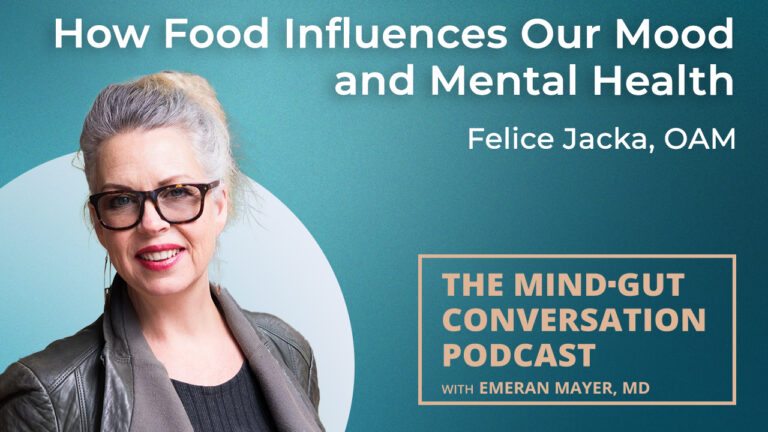
In a recent conversation, Professor Felice Jacka, one of the pioneers of nutritional psychiatry, shared a perspective that I believe deserves far more attention: the future of mental health may depend heavily on the health of our microbiome, our environment, and even the soil beneath our feet.
This is no longer a fringe idea. It is becoming one of the most important scientific conversations of our time.
Nutritional Psychiatry: Expanding the Mental Health Conversation
Nutritional psychiatry is the field that examines how diet and nutrition influence brain function and mental health across the lifespan. While that may sound intuitive today, it was not long ago that the idea was largely dismissed within mainstream psychiatry.
For years, mental illness was viewed almost exclusively through the lens of the brain itself. The focus remained “above the neck,” centered on neurotransmitters and receptor activity. But emerging research gradually revealed that many of the systems deeply involved in psychiatric disorders — the immune system, inflammatory pathways, stress response networks, and the gut-brain axis — are all profoundly influenced by what we eat.
This shift has fundamentally changed the conversation.
We now understand that food is not simply fuel. It is information. Every meal communicates with our immune system, our metabolism, our gut microbes, and ultimately our brain.
The Brain and Food Share a Surprising Similarity
One of the most fascinating points raised during the discussion is that both the brain and food are extraordinarily complex systems.
We often reduce nutrition to calories, fats, carbohydrates, proteins, vitamins, or minerals. But whole foods contain tens of thousands of biologically active compounds, many of which we are only beginning to understand.
At the same time, the brain remains the most complex organ we know of.
And standing between these two systems is the microbiome.
The microbes living inside and around us help transform components of food into countless signaling molecules that influence inflammation, mood, immune function, metabolism, learning, and cognition.
This is one reason the conversation around mental health can no longer focus solely on psychology or pharmacology. We must also consider ecology.
The Hidden Cost of Modern Food Systems
One of the most powerful themes in this conversation was the growing concern around industrialized food production.
Modern food systems have dramatically increased convenience and shelf stability, but they have also contributed to a profound loss of microbial diversity in the soil, our food, and ultimately our bodies.
Pesticides, herbicides, monocropping, soil depletion, and ultra-processed food manufacturing do more than alter agriculture. They change the biological relationship between humans and the microbial world we evolved alongside.
Research now suggests that the microbiome of healthy soil may directly influence the nutrient density and phytochemical richness of plants.
In other words, two vegetables may look identical on the outside while delivering profoundly different biological effects once consumed.
This may help explain why many modern foods appear healthy superficially but fail to support long-term resilience.
The Microbiome May Influence Mental Health More Than We Realized
Perhaps the most exciting aspect of nutritional psychiatry is the growing evidence connecting microbial diversity with brain function.
Early studies suggest that environmental microbial exposure can influence immune regulation and anxiety-related behaviors.
Researchers are now exploring how reduced microbial exposure in modern environments may influence neurodevelopment, including conditions such as ADHD, autism spectrum disorders, and schizophrenia.
This idea fits within what many scientists now call the “One Health” framework — the recognition that human health, environmental health, and planetary health are inseparably connected.
We are not biologically separate from our environment. We are extensions of it.
Depression, Diet, and the Hippocampus
One of the strongest areas of evidence in nutritional psychiatry involves depression.
Large observational studies across multiple populations consistently show that higher diet quality is associated with lower rates of depression and anxiety across the lifespan.
More importantly, clinical trials now suggest that improving diet quality can meaningfully improve depressive symptoms, even in individuals with moderate to severe depression.
A particularly important brain region in this discussion is the hippocampus — an area involved in memory, emotional regulation, and learning.
Unlike many parts of the brain, the hippocampus retains the ability to generate new neurons throughout life. Research shows that healthy dietary patterns appear to support hippocampal health, while ultra-processed diets may impair it.
Even short-term dietary changes matter.
In one study discussed during the conversation, healthy young adults consuming a highly processed diet for only several days showed measurable declines in hippocampal-related cognitive performance.
That finding should give all of us pause.
Why Ultra-Processed Foods Are So Problematic
The conversation around ultra-processed foods often becomes oversimplified. It is not just about sugar or calories.
Ultra-processed foods fundamentally alter the natural structure of food itself. They often remove fiber, phytochemicals, and microbial-supportive compounds while adding emulsifiers, artificial sweeteners, stabilizers, and industrial additives.
Importantly, research now suggests that our gut microbes respond very differently to these foods compared to minimally processed whole foods.
Even when two diets appear “nutritionally equivalent” on paper, their effects on the microbiome may be dramatically different.
That distinction may prove critical for understanding chronic inflammation, metabolic disease, and mental health disorders moving forward.
It’s Not About Perfection or Weight Loss
One of the most refreshing aspects of this discussion was the reminder that nutrition should not be reduced to body size or dieting culture.
Mental health benefits from improved nutrition appear across all body sizes.
The goal is not punishment, restriction, or perfection. The goal is nourishment.
And perhaps even more importantly, dietary changes do not need to be extreme to matter.
Repeatedly, the evidence points back to simple foundational patterns:
- More diverse plant foods
- More legumes and whole grains
- More minimally processed foods
- Fewer ultra-processed products
- Greater microbial diversity
- More connection to real food and natural environments
These are not trendy interventions. They are biological fundamentals.
The Most Important Food for Brain Health?
When asked to identify one dietary component with the strongest evidence for supporting overall health, Professor Jacka highlighted whole grains.
Whole grains provide the complex carbohydrates and fibers that nourish beneficial gut microbes, helping them produce anti-inflammatory compounds that support both metabolic and brain health.
This is an important distinction in today’s nutrition culture.
Not all carbohydrates are the same.
The human microbiome depends on complex plant fibers to function properly. When we remove them entirely, we may inadvertently starve many of the microbial species that help regulate inflammation, mood, cognition, and immune balance.
A Different Way to Think About Mental Health
I believe one of the most important takeaways from this conversation is that mental health cannot be separated from the broader biological systems that sustain human life.
The brain is not isolated from the gut.
The gut is not isolated from the environment.
And the environment is not isolated from the health of the soil that produces our food.
This systems-based perspective does not replace psychiatry, psychology, or medications when appropriate. Rather, it expands the conversation into something more complete, more interconnected, and ultimately more hopeful.
Because when we begin supporting the foundational systems that regulate human health, we often influence far more than a single symptom.
And perhaps that is where the future of medicine is heading next.
FAQ
What is nutritional psychiatry?
Nutritional psychiatry is the study of how diet and nutrition influence brain function, mood, and mental health. It explores how the foods we eat affect the gut microbiome, inflammation, metabolism, and other biological systems that play important roles in emotional and cognitive well-being.
How does the gut microbiome affect mental health?
The gut microbiome produces many biologically active compounds that communicate with the brain through the gut-brain axis. These compounds can influence immune function, inflammation, stress responses, and neurotransmitter activity, all of which contribute to mental health.
Why are ultra-processed foods linked to poorer mental health?
Ultra-processed foods often contain fewer naturally occurring nutrients and fiber while including additives, emulsifiers, and other ingredients that may negatively affect the gut microbiome. Emerging research suggests these changes may influence inflammation and other pathways involved in brain health and mood.
What role does soil health play in human health?
Healthy soil supports diverse microbial communities that help plants develop a wide range of nutrients and beneficial compounds. Researchers are increasingly recognizing that soil health, food quality, the gut microbiome, and human health are all interconnected.
Can improving my diet help with depression or anxiety?
Research suggests that higher-quality dietary patterns are associated with better mental health and that improving diet quality may reduce symptoms of depression in some individuals. Nutrition should be viewed as one important part of a comprehensive approach to mental health, alongside medical care and other evidence-based treatments when needed.
Why are whole grains important for the gut microbiome?
Whole grains provide dietary fiber and other compounds that nourish beneficial gut microbes. As these microbes ferment fiber, they produce short-chain fatty acids and other metabolites that help support gut health, immune function, and communication along the gut-brain axis.